Over the past decades, research on the renewal of school architecture has increasingly placed the relationship between physical space and learning processes at the center of pedagogical debate, promoting a rethinking of schooling through learning environments, both physical and digital. Drawing on…
Learning through play is essential in early childhood and primary education. Digital games employ motivational strategies and create ludic spaces. One example is ActiveFloor, an educational technology (EdTech), which allows children to physically interact with projected learning games. In a pilot…
Through learning environments such as the Philosophy for/with Children´s (P4wC) methodology, young people share a common philosophical issue and face a collective path of research towards a(some) possible answer(s). The article introduces the P4wC framework, linked to the studies of uncertainty in…
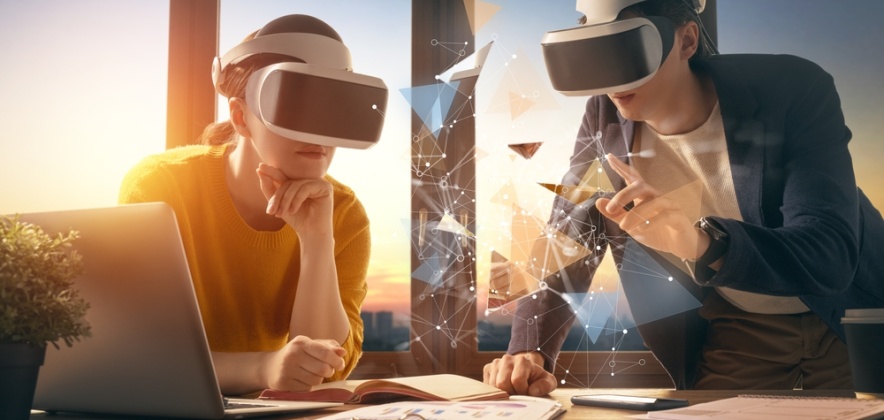
The metaverse, a participatory and shared three-dimensional space, the result of multiple technological elements including video, virtual reality and augmented reality, proposes an ad hoc learning context in which direct interaction with the contents offers the opportunity to experience a more…
In the educational applications of multimedia and virtual reality there is a work of redefinition of the principles relating to the construction of learning environments, and of the role assumed by digital instruments in attributing significance to real life contexts. digital skills education, an…

 Classified "A" by ANVUR in the fields 11/D1, 11/D2 Scientific in the field 14.