| NUMERI PRECEDENTI |
Anno I - 1,2009 Anno I - 2,2009 Anno II - 1,2010 Anno II - 2,2010 Anno II - 3,2010 Anno II - 4,2010 Anno III - 1,2011 Anno III - 2,2011 Anno III - 3,2011 Anno III - 4,2011 Anno IV - 1,2012 Anno IV - 2,2012 Anno IV - 3,2012 Anno IV - 4,2012 Anno V - 1,2013 Anno V - 2,2013 Anno V - 3,2013 Anno V - 4,2013 Anno VI - 1,2014 Anno VI - 2,2014 Anno VI - 3,2014 Anno VI - 4,2014 Anno VII - 1,2015 Anno VII - 2,2015 Anno VII - 3,2015 Anno VII - 4,2015 Anno VIII - 1,2016 Anno VIII - 2,2016 Anno VIII - 3,2016 Anno VIII - 4,2016 Anno IX - 1,2017 Anno IX - 2,2017 Anno IX - 3,2017 Anno IX - 4,2017 Anno X - 1,2018 Anno X - 2,2018 Anno X - 3,2018 |
| VIGNETTA |
|
| IN VETRINA |

Anicia 2016 Euro 26,00 |
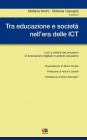
S. Nirchi - S. Capogna |
| Tra educazione e società nell'era delle ICT. Luci e ombre del processo di innovazione digitale in ambito educativo |
|
| isbn13 : 9788867092727 |
|
|
|
|
|
| OSPITE SCIENTIFICO |
|
Prof. A. Cocozza, Univ. Roma Tre
Antonio Cocozza è Vice Direttore del Dipartimento di Scienze della Formazione e Presidente Corso di laurea in “Formazione e Sviluppo delle Risorse Umane”, presso l’Università degli Studi Roma Tre.
^(chiudi) |
|
|
| RAPPORTI |
|
| Workplace safety: Forming to change behaviors and attitudes |
| di
Fiorenza Misale 2018-12-31 |
| Today, training is considered one of the fundamental interventions to improve the perception of occupational risk and to help develop and sediment culture on occupational safety. With regard to occupational safety, a timely analysis of the training needs must take note of the risk assessment carried out and reported in the evaluation document, the analysis of the accidents that have occurred, the different Professions pertaining to the production system and the tasks carried out. Research in literature shows when the training takes a fundamental role for the reduction of the accident, a training taking into account the risks present in the work activity and especially the linguistic skills and The worker's cultural baggage. continua... |
|
|
| Evaluation of learning |
| di
Roberto Orazi 2018-12-31 |
| The problem of evaluation is an old problem, because every time we take initiatives to achieve a training objective, we also feel the need to check if the objectives are achievable. Evaluation processes today use new technologies that are able to meet this need, but it is also necessary to give the coordinates of the evaluation moment in order to trace the historical developments, the tools and the techniques with which the evaluation process deepens and supports the educational sciences. continua... |
|
|
| The occupational health and safety in work-based learning system |
| di
Sara Stabile, Cinzia Milana, Emma Pietrafesa, Rosina Bentivenga (ricercatrici INAIL) 2018-12-31 |
| The dual system work-based learning (WBL) allows the students to realize part of their formative curriculum in working contexts, turning the model of tied up learning to a single disciplines into a different model that recognizes the value of the informal and not formal learnings in terms of competences. Education and training are characterized more and more today by a strong and pervasive use of the technology that accelerates the communications times, the informations management, the interaction and above all the elaboration process of new contents overcoming the dimensions space-time typically of a traditional education linked to a classical educational environment. Obviously, the training experience in working contexts requires a particular attention to the protection of the scholars health and safety, so that the acquisition of specific ability has to be assured for acting in aware and responsible way and at the same time the suitability of the external learning places to the scholastic circle must to be guaranteed. continua... |
|
|
| Adult conjoined twins in between personality and corporeity |
| di
Marco Tuono 2018-12-31 |
| We consider three perspectives in determing the number of persons involved in the so called "Hensel twins", a case of adult conjoined twins:
the materialistic perspective establishes the equivalence between the number of brains and the number of persons involved. A body having two brains is indeed two distinct persons;
according to the linguistic turn, dialogue is what establishes the subjects involved in the so called adult conjoined twins. In this perspective, the Hensel twins are (again, but for different reasons) two dinstinct persons;
considering the somatocentric turn, the human being is characterized by his/her body. Being the world experienced through the body, the "Hensel twins" are just one single person.
In conclusion, none of these perspectives, once considered detached from the others, fit to determine the number of "Hensel twins": the Hensel twins are two persons sharing the very same body. continua... |
|
|
| Human being in between endless desire and care |
| di
Marco Tuono 2018-12-31 |
| The main object philosophy deals with from its beginning is being. Human being, because of his peculiar connection with being, is characterized by an endless deside that cannot properly be fullfilled. Consciousness is indeed twofold, being composed by 1) its formal comprehension of being (Aristotle); and 2) differing from God the feature of finitude: being is in fact, for consciousness, not somenthing that can be grasped (and so human being has an endless desire). The contradiction between these two levels of consciousness is what produces unconscious. continua... |
|
| STUDI E CONTRIBUITI DI RICERCA |
|
| Enhancing digital citizenship |
| di
Sonia Montegiove 2018-12-31 |
| Digital culture transforms citizens into people who are aware of digital phenomena and dynamics wich have changed, and will change more and more, processes, habits, lifestyles. What is the role of the Public Administration and School in accompanying young people and adults to this new journey? How to support digital awareness diffusion necessary to govern the change? Which is the way to create networks of people able to sustain and improve themselves through experiences and good practices exchange? How to connect networks so that they can build a new "ecosystem" in which are protagonists openness, comparison, creativity and sharing? The experience of the Umbria Region that is giving life to physical spaces for digital facilitation, DigiPASS and innovation laboratories, Living Lab, where to cultivate digital culture. continua... |
|
|