Within the framework of a strategy of attention to the life cycle (Pinto Minerva, 2012; WHO, 2011), the pedagogy of the elderly (Musaio, 2020) approaches the theme of care (Mortari, 2006; Iori, 2008) through the promotion of the person in his uniqueness, in consideration of the networks in which he…
The paper presents the results of a first exploratory survey on an innovative teaching project, created on the initiative of some teachers interested in practicing formative and orienting assessment with strength and continuity, as well as inclusive pedagogical methodologies. The project – “The…
This paper aims to present an ongoing experimentation in the University of Bari to the propotyping of blended learning training models in the university context. The current academic scenarios, in fact, are characterized by a particular attention to the methods of delivery and use of the training in…
The article provides an overview of the education professionals, who operate in different educational fields with an “apical” level role. Specifically, the research presents the results of a survey referred to the ex-students of Master’s Degree course in Pedagogia e Scienze dell’educazione e…
Cooperative approaches and technology are recognized as key issues in the contemporary debate on how to promote social inclusion in schools. Within the ongoing EU Project COoPING (Erasmus+ KA210-SCH) the links between them were explored through a scoping review. The ERIC database was queried to…
The research was carried out as part of a vast project to combat failure in university studies, the provision of guidance and mentoring for students entering the university for the first time, with a view to improving the services offered. First, it was meant to verify the content validity of a…
The third sector also represents an informal learning context where competence and knowledge are acquired, often in a tacit and indirect way. This research focuses on the strategic competences of the third sector professionals and on the pedagogical methods to make them visible and to encourage…
The paper introduces the theoretical and methodological framework behind the design of a digital internship programme (Tirocinio-on) and the related tools based on the constructs of self-directed guidance, digital work-integrated learning and career management skills. The programme involved a total…
The overcoming of the Covid-19 pandemic elicited to rethink didactic models of STEAM teaching towards the construction of methodological repertories learner-centered and inquiry-based, useful to emphasize learning through experience in highly technological contexts. Against this backdrop, the…
The spaces in which education takes place are becoming progressively more fluid, especially when we think of the advances in the development of increasingly sophisticated and all-consuming technologies and digital tools. The resulting network can no longer be configured as an actual place, confined…
In recent years, while the Covid-19 epidemic has highlighted the centrality of teachers’ skills for learning in non-standard conditions, ministerial actions related to the PNRR have led to the establishment of Teaching and Learning Centers. In 2022, a University Commission for Faculty Development…
The paper describes two Project-Based Learning experiences (PjBL) that engage future educators. The proposed projects include the creation of a radio program for the web broadcaster Radio UAO and a virtual Lego set for the Lego Idea contest. The methodology allows to acquire meaningful concepts in…
The transition from upper secondary education to tertiary education is a crucial node of awareness and empowerment that, if not managed correctly, can give life to "university drop-out". This contribution examines one of the strategies implemented by universities to handle this phenomenon: peer…
The article presents a two-year trial aimed to develop reading and writing pre-requisites in kindergarten through the enhancement of metaphonological and musical activities. On the basis of scientific evidence, it is reasonable to suppose that the use of musical play may represent a promising…
The illustrated study, by the title “Cyberbulling? No thanks, together we can! would like to present the results of a research that involved some classes in the territory of Bari’s city, on a sample of eighthundredand fifty male and female students. The focus of the research is to identify the…
About 30% of students in the world attend primary education in multi-grade classes. Multi-grade education is common in many rural areas of the so-called minority world, i.e. high-income countries such as the United States, Canada, in many European countries and in majority world countries such as…
This contribution is part of the study and research trajectories launched by the European Agency for Development in Special Needs Education, Teacher education for inclusion – International Literature Review (2012) and aims to highlight how the ICF-CY (World Health Organization 2001), based on the…
The UN 2030 Agenda for Sustainable Development includes 17 goals, the fourth of which is dedicated to quality and inclusive education as a basis for improving people's lives. Sustainable development goes hand in hand with the construction and dissemination of a scientific approach and method, as an…
Using devices and of self-narration can be essential for those who experience multiple forms of inconvenience and think they cannot find their way in their lives, losing the meaning. They represent a toolbox for rediscovering who one is, for understanding what one has to do for what one wants to…
The Covid-19 pandemic has forced higher education systems in most parts of the world to quickly adapt to face the emergency. While a certain amount of research has focused on analysing the influence of the pandemic on teaching and learning practices or on international mobility, less interest has…
The article presents a case study dedicated to the analysis of teaching and learning resources elaborated in the scope of the FABULA C-Plus Project, developed between 2020 and 2022, through partnerships with institutions from Italy, Greece, and Spain; as well as the potentiality of these strategies…
The reception and inclusion of immigrants is a process in which educational inclusion is still a problematic node, which needs to be investigated, in order to understand what the obstacles are to access to lifelong learning and what are the necessary interventions to encourage participation. The…
Il gruppo di ricerca Didasco (Didattiche Scolastiche) del Dipartimento di Scienze della Formazione, Psicologia, Comunicazione dell'Università degli Studi di Bari Aldo Moro, ha condotto uno studio pluriennale sui fenomeni del bullismo e cyberbullismo alla luce del quadro normativo tratteggiato dalla…
Il periodo post-pandemico ha lasciato aperte questioni importanti e ineludibili che interessano la scuola e l’educazione in generale e che interrogano tutti coloro che si occupano di insegnamento-apprendimento sulla necessità di vivere un’esperienza scolastica e didattica di qualità, capace di…
Questo numero della rivista QTimes - Journal of Education, Technology and Social Studies si propone di contribuire a un costruttivo dialogo tra i ricercatori per comporre un’indagine critica, multilivello e interdisciplinare sui divari nella competenza digitale, fornendo uno spazio in cui…
In the educational context, technology is increasingly perceived as a key element of great educational renewal. For this reason, its use must be versatile and dynamic and adapt to various factors such as the teacher, the specific level of education, the characterising elements of the discipline, the…
Due to the immersive and pervasive nature of technology and connectivity, digital skills are constantly evolving. It’s a stratified, immanent and historical knowledge, not limitated to technical skills only. It touches on the cultural, economic and political citizenship dimensions as well as the…
With the pandemic period, the generation of data has grown exponentially and in order to ensure that it can be accessed and read by citizens and future generations, new communication methods are emerging, which are immediate and easy to interpret, without the need for specialised skills. Through the…
In the wake of media education and research in the field of experimental pedagogy, this paper traces the regulatory stages, theories and empirical applications that are involved in Information and Communication Technologies (ICT), with a focus on the inclusion of these tools in the educational…
The purpose of this paper is to illustrate the conceptual framework of Universal Design for Transition (UDT) (Best, Scott, & Thoma, 2015; Thoma et al., 2009), a recent framework that integrates the founding principles of Universal Design for Learning (Meyer, Rose & Gordon, 2014; CAST, 2018;…
Over the past two decades, technological change has produced new digital environments capable of accommodating and enhancing the artistic and cultural heritage that exists in vision but also in interaction. The contribution analyzes the possibilities of using networked historical-theatrical…
Increasing the quality of learning and teaching by promoting a closer link with research is the main mission of the European Knowledge Area. After a first revolution that has affected the school, characterized by the introduction of distance learning, today we are witnessing an ambitious challenge…
Today there is no relational, physical, social and economic/digital phenomenon that manages to escape from algorithmic modeling: this pervasiveness of algorithms shapes and deconstructs economic and social relationships. The question is very serious and deserves a continuous pedagogical study: it is…
The ethical-functional design, programming and management of artificial intelligence and robotics represent one of the greatest challenges that the new generations are certainly facing. A challenge that commits man to a return to the sense of the relationship that he/she has always weaved with…
The paper poses as a basis for analysis a question connected to the evolution, which took place from the 2000s to today, of the amount of data relating to the European training environment and made available to teachers of all grades and levels: "2000: Data Base and E-learning Platforms; 2020: Big…
Google is the most widely used search engine in the world (Statcounter, 2022) and many users consider it an indispensable tool for accessing any content on the Web. Nevertheless, one cannot overlook the fact that the service offered by the Mountain View company is subordinate to the profits it makes…
In the educational applications of multimedia and virtual reality there is a work of redefinition of the principles relating to the construction of learning environments, and of the role assumed by digital instruments in attributing significance to real life contexts. digital skills education, an…
The relationship between giftedness and the digital revolution deserves particular attention as regards the emotional experience of gifted children and young people. They are dependent on the emotional context, they don’t know how to act without allowing themselves to be permeated by the affective…
In today's hyper-connected society, the implications of developing one's own identity, experience and collective memory are influenced by algorithms. Everything is interconnected between real and virtual World. In this panorama there is also the world of school and training that has had to adapt,…
Disinformation by non-European actors can have negative risks to the detriment of people, which are not predictable and calculable. The economic value of the production, use and development of artificial intelligences has been growing exponentially in recent years. But what are they? What are the…
In 2021 the Research Center on Education for Media, Innovation and Technology (Cremit) of the Catholic University and Save the Children proposed using the new construct of “digital educational poverty”, which broadens the concept of “digital divide”. Digital educational poverty is not…
The paper aims to contribute to the reflection on the new scenarios and to deepen the best practices that emerged in the school context during the pandemic period. Are reported the outcomes of an exploratory research carried out within the framework of a Manifestation that, integrating a plurality…
The different contexts of education - both related to the university context, to teacher training, and to different professional figures - have been going through a profound change in the ways not only of delivery and fruition of online training content. A debate, the one related to instructional…
Agenda 2030 sets out goals that refer directly to the world of education: "Providing quality, equitable and inclusive education and learning opportunities for all" (ONU, 2015, p. 14). The need for equitable and inclusive education is, in fact, a fundamental prerequisite for the improvement of people…
Starting from the principles of Karl Mannheim's sociological theory of generations and from the analysis of the 11th Civita Report "Indagine su Giovani e Cultura", focused on the knowledge of values and expectations of the young generations in the digital age in order to favour their active…
After the spread of Covid-19 in Italy, digital technologies have made it possible to carry on the ordinary activities of the various educational agencies, through the main tool of Distance Learning (DaD). This paper focuses attention on the social impact (OEC-DAC in Stern, 2016) of the DaD to…
The general purpose of this review is to analyze the impact of artificial intelligence (AI) on the labour market. The specific objectives consist in making explicit the relationship between AI, lifelong learning and school education and identifying the skills and capabilities needed, within this…
the article investigates the ethical relevance of artificial intelligence and the impact of technologies on the university life of the student population. Using both a theoretical and empirical approach, it is divided into two parts: in the first, the importance of ethically investigating the…
The effects of the Coronavirus pandemic on the Italian school system have indirectly suggested the path that the Italian education system must be able to take in order to move toward a cutting-edge school model where the fluidity of communicative processes triggered by ICT must be able to integrate…
Digital skills currently play a fundamental epidiptic role in the ability of education systems to renew themselves and actively project future generations into an increasingly medial anthropic reality within a process of evolution which globally affects the whole of society. The multifaceted…
In the hyper-connected society, the profound and incessant technological transformation, augmented by the pandemic, inevitably reverberates in school contexts, reinforcing the innovative use of digital technology by competent teachers and school managers who are aware of the new forms of…
The unfolding educational scenario imposes reflections related to the function and decisive role that technologies can have in settings where emergency looks like a constant condition of the world and not a temporary and limited phenomenon. It requires new skills for teachers, related to the…
In the academic year 2021/2022 the research project “Prevention of domestic accidents and promotion of physical activity over 60” was carried out to promote the well-being of 8 groups of people over 60 (218 in total) in the province of Palermo. Within the project, the administration of the…
A strong expansion of digital practices has accompanied the pandemic emergence, also in education. This rapid change in an increasingly digital society implies to rethink the way education and training are designed in the various subject areas (European Commission, 2020), taking into account the…
The paper presents the main findings of exploratory research on the use of smartphones in the period of Covid-19. In particular, the quantitative survey, analyze the use of mobile phones within the family and domestic environment, specifically in the context of those family and intimate…
Due to the increasing SARS-CoV-2 infections, teaching activities in Italian schools were suspended on 5 March 2020. Since then, ministerial decrees promoted a teaching-learning process, totally or partially computer-mediated, leading to significant changes in the relational and content dimension of…
The common ground into which historical knowledge, techniques for creating digital environments and the tools of contemporary museology converge is called, by experts, Virtual cultural heritage, a recent field of research that aims at the virtual reconstruction of cultural heritage, useful for…
The new digital technologies are now an integral part of the communication and training practices of young people, who are conceived as naturally predisposed to the use of ICT. However, the rhetoric of the screen or net generation (Rivoltella, 2006) risks masking the diversity of ICT use experiences…
In Italy the training of the support teachers takes place in universitary specialization courses, in which the ICT are an important topic, and in the Covid-19 pandemic era the lectures were conducted remotely. Within the ICT remote class dedicated to the secondary teachers at the University of…
Bertin's works on ethics, the phenomenology of commitment, problematicism and the rational personality helps to clarifying how the charisma of the educator must never cross over into the abuse of irrationality. In the specific case we want to try to re-read Jean Vanier's message, identifying the…
“Passing” is realised in being able to be considered as belonging to a social and relational category different from the one imposed, generally, by birth. This passing, in situations of extreme racial abuse, is necessary to survive; in most cases, it is motivated by obtaining a better quality of…
In the Autumn of 2021, the Italian Regional School Office (USR) for Sicily launched the Insieme project with the aim of supporting schools and teachers in the development of learning environments and inclusive teaching strategies and to systematize groups and practices for self-evaluation of…
In this paper the author analyzes an hypothesis to define an educational project for a school as an educational community to promote the inclusive democracy. In this perspective the author focuses a new possible Agreement of the Educational Co-responsibility and the importance of the role of the…
Il volume presenta, con uno sguardo attento ai diritti umani e nello specifico al diritto all’istruzione, i dati ricavati da un progetto di ricerca realizzata adottando una prospettiva aperta rivolta all’Europa. Il libro è il risultato del Progetto GRE19-05, finanziato dall'Università di…
In questo volume dal linguaggio scientifico e al contempo fluido, diretto e pragmatico, l’autore Vincenzo Bonazza tratta del tema dell’individualizzazione dell’insegnamento in ambito scolastico: tema attuale e problematico, che risponde alla sempre urgente necessità della nostra società di…
This contribution is dealing with the issue of online teaching in the Degree Course in Primary Education Sciences (SFP) at the University of Bari. An exploratory approach was adopted for the research, centered on students’ perceptions and opinions with reference to the latest ways of conducting…
This study aims to investigate the relation between students’ perception of their parental involvement in education and their motivation and well-being at school. For the survey, a parental involvement questionnaire (Clinton & Hattie, 2013) was adapted, administered to a sample of 361 middle…
The pandemic has had a strong impact on the psyche, emotions, sociability, behavior and lifestyles of adolescents and its prolongation is defined as a "secondary pandemic" because it is a less tangible, visible and quantifiable consequence than the primary one that every day invades official…
The health emergency caused by Covid-19 has highlighted the importance for students of having a quiet place to study and a technological equipment suitable for distance learning, in their homes. Until two years ago, the in-person classroom learning could compensate for the lack of these aspects,…
The health emergency caused by the spread of COVID-19 during 2020-21 forced schools of all levels to provide online education. The complexity of the situation that has emerged and the problems that have immediately spread has stimulated debate on various aspects of the issue, in particular on the…
The Hospital School (HSO) is configured as a non-standard learning environment in which all the indicators of the school system changes: space, time, bodies and relationships. The research saw a first phase consisting of an exploratory survey conducted with a mixed method approach to investigate:…
The birth of a child with a disability marks an irreversible existential turning point for the family. We have chosen to carry out a narrative investigation by examining the so-called "sliding doors effect" in family caregivers, in search of possible worlds, aspirations, stories, bonds, impulses…
In today’s world, the technological devices are becoming more and more protagonists in education field. They are predominant not only at school and university level, but they also have considerable educational potentiality in teacher training courses. This paper aims at focusing on the skills of…
The educational inclusion of adult immigrants is a goal that requires the personalization of education and training paths, both in terms of supply and methodological approaches. In sub-Saharan Africa, school education is not always accessible to everyone, but a tradition of education and lifelong…
The paper examines the transformations that with the pandemic emergency (impact on quality of life) and technological evolution (cognitive overload) are introduced into teaching processes. Subject of analysis are the contextual and personal factors that can affect the learners’ propensity to…
In function of educational practice, aimed at supporting the individual in the complex development of personal growth, guidance is outlined as a continuous process of deconstruction and reconstruction of one’s existence in a form that is at the same time autopoietic (the individual is the author…
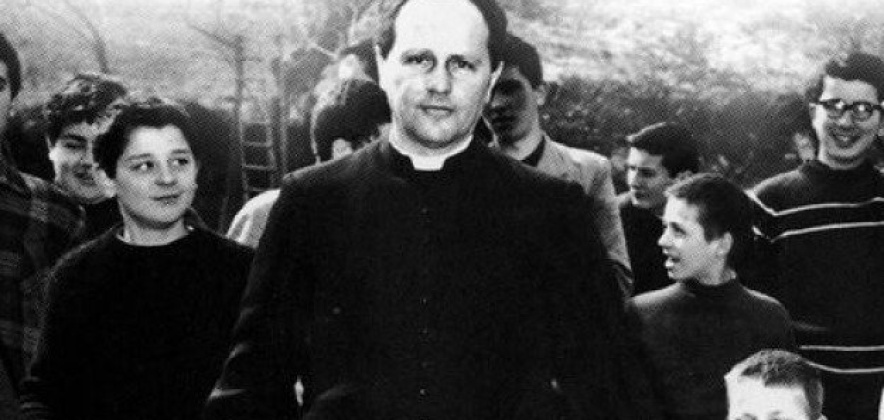
Among the social, economic and political contradictions of the post-war period that reverberate in Italian school education with the class structure of society, grades used for selective and judicial purposes, school dropout, etc., emerges the figure of Don Lorenzo Milani who saw the Italian school…
Early school leaving is a complex phenomenon that often appears as a combination of individual factors, personal history, and the cultural context. Moreover, this phenomenon impacts the individual's paths, choices, quality of life and the social and cultural capital of the country in which they…
Residential care experiences are heterogeneous, as well as educators’ practices and educational models of reference. Challenges faced by residential care to meet increasingly heterogenous emerging needs (Marchesini et al., 2019) and the need to act at systemic level, raises questions on…
Among the social, economic and political contradictions of the post-war period that reverberate in Pauline Kergomard, an active and committed personality from a social and political point of view, is a French pedagogist who articulated her educational reflection between 1800 and 1900 whose name is…
Western society is organised according to the so-called contractualist legislative model, i.e., all subjects act on the basis of benefits or sanctions resulting from their behaviour; this means that everyone chooses his or her behaviour according to the social role he or she plays and the utility of…
The recent development of eSports raised a number of ethical, philosophical, and pedagogical questions, building a new and lively interdisciplinary debate. Hence, this paper aims to offer a general overview of the topic, focusing firstly on the controversial definition of electronic sports and the…
To outline the characterizing traits of work as an aspect of human education, it is essential to cross the pedagogical reflection diachronically, underlining those plots on which the pedagogical discourse around work is based. Work, a word used to identify both actions related to fatigue and effort,…
Music is one of the main creative languages of our culture and, if proposed through an appropriate manner to the educational instances of each ages, it contributes to the harmonious and integral development of subjectivity. This present essay wants to reflect on the decisive role of music education…
Today it is not complex to detect a great fragmentation of the fields of experience, which translates into the diversity of languages and symbolic codes, and in the multiplicity of evaluation criteria with which one approaches the study of the surrounding reality. A fragmented situation, therefore,…
The assessment theme is capable of generating a reflection on complexity starting from the educational-curricular dimension. Over the years, the evaluation approach has expanded and modified its role, so that from the mere formulation of a judgment on learning, it has gradually arrived at the…
Since 2020, the sanitary emergency conditions caused by the spread of the Covid-19 pandemic have dramatically and shockingly spilled over the entire globe. This has affected and still affects every aspect of human living, including education. The structural change in school organization, committed…
Recent legal reference (Art. 103 of the Italian Budget Law for 2022) has induced Italian educational authorities to consider Motor and Sports Sciences graduates as prospective Italian Primary School teachers from 2022/2023 onwards. This provision finally puts an end to the long-standing dilemma…
A supporter of women's emancipation, Georges Hébert founded in 1918 “La Palestra”, a gymnastics school for women and children, considered the flagship of what was called “Méthode naturelle d'éducation physique, virile et morale”, a method that combined training of physical abilities,…
In this essay we consider the educational experiences for the childhood that had influenced a lot the past and they are typical of the present, which are a demonstration of a possible connection between tradition and innovation. Once we have discussed over the pedagogical thinking and the Ferrante…
Due to the Covid-19 pandemic, blended teaching has been the norm in the past two years. This has brought about online workshops characterized by collaborative learning, action-reflection and on line interaction. Through an exploratory data research performed via an on-line questionnaire, this…
The paper presents an in-depth focus on the SIRD national survey on distance education during the COVID-19 pandemic for the Tuscany Region regarding the dimension of collaboration as a strategic asset to co-construct effective educational and teaching practices in all school orders. The…
The paper examines the structural model of a new type of lesson used to verify the preparation of the student before the final examination of any academic study course. This innovative teaching tool, which can be easily applied also in the study paths of all other non-academic levels, including…
One of the objectives of the 2030 Agenda is to promote lasting, inclusive and sustainable economic growth in which digital technology is an essential driver to ensure the active participation of the entire population and to support structural and organisational change. With the digital…
The Information and Communication Technologies, in today's school, represent useful tools to mediate and support students in a systemic-relational learning process and in activities of shared and participatory construction of new knowledge (Van Leeuwen & Janssen 2019; Torri, 2020). However, when…
For several years teachers’ training has been the object of analysis and reflections by different scholars who question (us and) themselves on the meaning of doing school in our contemporary world (Bocci, 2018; Sibilio & Aiello, 2018; Baldacci, Nigris & Riva, 2020). In the area of…
The growing immigration wave of populations fleeing wars, famines and poverty highlights the need to create tools for welcoming children to schools in countries unknown to them. Language can represent a great barrier to inclusion and integration, causing children to suffer especially for the lack of…
Italian state schools abroad are facing a new challenge: to take the concept of inclusion of students with special education needs out of the national territory to better promote the spread of Italian culture and a solid culture of inclusion and acceptance. This study, through the special…
In this contribution we wish to present the case of a two-year training course, conducted within a Comprehensive Institute, aimed at co-design the Civic Education curriculum. The starting need was to give both an epistemological and didactic structure, and a design framework to the Citizenship…
Orienting secondary school students to an informed choice of university path is one of the university's missions. The orientation actions involve different levels of detail: from informative/dissemination to more active activities. This contribution presents an effort to orient high school students…
 Classified "A" by ANVUR in the fields 11/D1, 11/D2 Scientific in the field 14.